
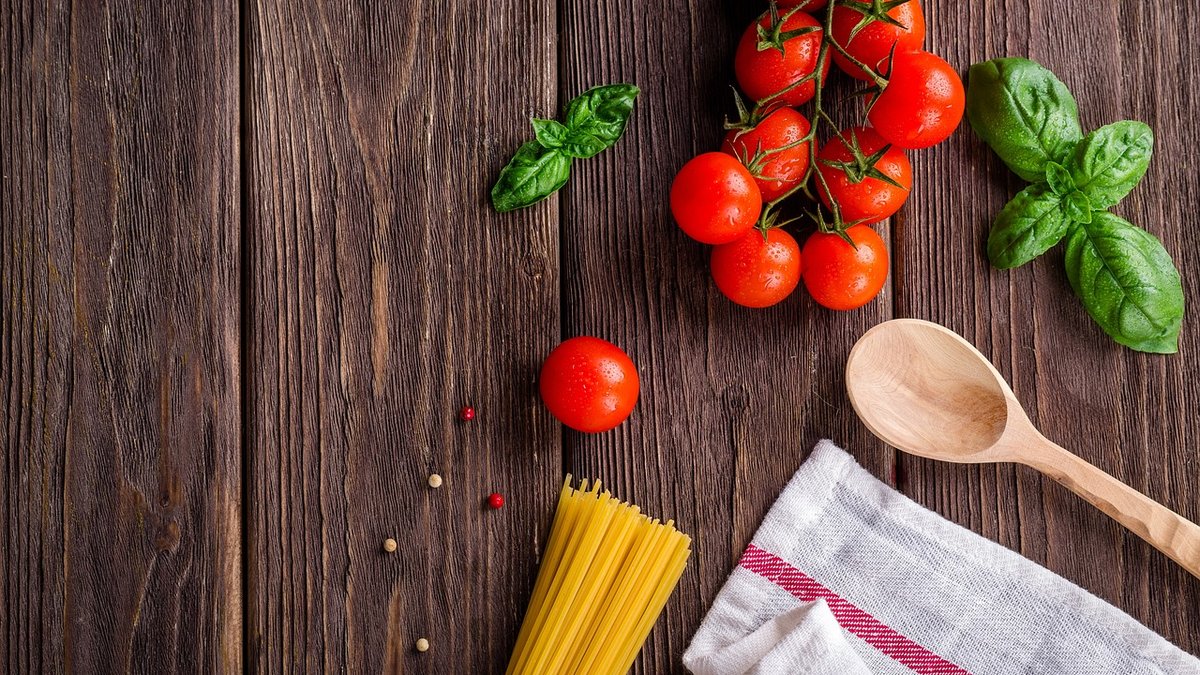
There is a particular kind of magic in a bowl of pasta you made with your own hands. In Italy, fresh egg pasta is not a restaurant performance — it is a Sunday afternoon ritual, made at a kitchen table while someone opens a bottle and someone else argues about the shape. For couples, it is one of the loveliest ways to spend an evening: flour on the worktop, a glass of something cold, and an hour of quiet, messy, satisfying work.
The good news is that it is not difficult. It requires no special equipment beyond a rolling pin, and it uses two ingredients you almost certainly have. The secret is not skill. It is patience, a reliable ratio, and a willingness to let the dough rest.
The classic ratio is simple: 100g of “00” flour to one large egg, per person. For a generous supper for two, that means 200g of flour and two large eggs. Weigh the flour rather than scooping it, and bring the eggs to room temperature before you start.
Tip the flour onto a clean worktop, make a wide well in the centre, and crack the eggs into it. Beat them gently with a fork, drawing in flour from the inner walls a little at a time. When it becomes too stiff to work with the fork, bring it together with your hands.
Knead on a lightly floured surface for eight to ten minutes. Push the heel of your hand into the dough, fold it back over itself, turn, repeat. It will feel rough and slightly tacky at first. Then, quite suddenly, it will become smooth, warm and supple — like the soft part of your earlobe.
If the dough sticks, dust with a little flour, but resist the urge to add a lot. A dry dough will never roll thin. If it cracks at the edges, wet your hands and knead again; the moisture will work in.
Now wrap it tightly in cling film or rest it under an upturned bowl for at least 30 minutes. This is not optional fussiness. Gluten tightens as you knead and relaxes as it rests, and only a rested dough will stretch to a whisper without shrinking back. You can leave it in the fridge for up to a day, which is handy if you want to prepare ahead.
Divide the dough into four pieces and keep the ones you are not working with covered. Flatten one piece into a disc.
Lay each sheet on a clean tea towel for five to ten minutes — just long enough to lose its stickiness, but not so long that it becomes brittle. For tagliatelle, roll the sheet loosely into a flat cylinder and cut ribbons about 6–7mm wide with a sharp knife. For pappardelle, go wider, around 2cm. Shake the ribbons out, toss them in semolina, and nest them loosely on a tray.
Fresh pasta cooks in two to four minutes. Bring a large pan of well-salted water to a rolling boil — it should taste like the sea — and drop the nests in. They are ready when they float and the colour turns from bright gold to pale, opaque cream.
Do not dress them like dried pasta. Cook them briefly in the sauce instead: lift them straight from the water with a slotted spoon into a warm pan with a splash of the cooking water, and toss over a low heat for thirty seconds. The starch on the surface will pull the sauce into a glossy coat.
Keep it simple. Butter, sage and a grating of Parmesan. A slow ragù. Good tomatoes, torn basil, olive oil. Cream, lemon zest and black pepper. These ribbons are delicate, and they reward restraint.
Pour something crisp while you cook — a Verdicchio, a Gavi, or a light Chianti if you are going the ragù route. Set the table properly, even if it is a Tuesday. If you have ever eaten tagliatelle in a small trattoria off a cobbled street, this is the closest you will get to it at home.
Freeze any extra nests on a tray for an hour, then tip them into a bag. They will cook from frozen in under five minutes, which means a proper dinner is always one pan of boiling water away. Flour on your sleeves, a glass in reach, someone you like across the table — that is the whole point.

Hi, my name is Anthony kuber. I am artist and fashion designer.
I love to travel and writing blogging.
Your email address will not be published. Required fields are marked *
Software Developer & Writer
Hey, I'm Diva, a developer and writer blending code and creativity. I'm driven by a deep curiosity and a relentless pursuit of excellence. Join me as I craft digital solutions and captivating stories.


